County approves property tax abatement
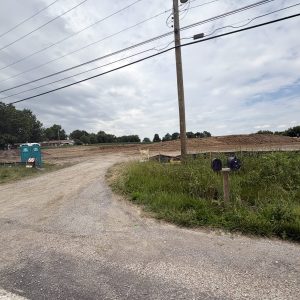
by Randy Pierce • Two warehouse buildings available for lease off of Horseshoe Lake Road in the area west of Illinois Route 157 in Collinsville are located at a site which is the subject of a property tax abatement resolution approved by the Madison County Board at its regular monthly meeting on June 18.
According to the legislation that was brought forward by the county board’s grants committee, the property at 1001 and 1003 McDonough Lane, consisting of a pair of structures measuring 48,000-square-feet each, will be subject to reduced property tax for 10 years as part of a program designed to encourage economic development.
The applicable property is located within the Madison County Discovery Enterprise Zone, which encompasses the municipalities of Collinsville, Troy, St. Jacob, Maryville, Glen Carbon, Highland and unincorporated areas near them, that was established in 2016 with the approval of the Illinois Department of Commerce and Economic Opportunity.
The resolution passed by the county board indicates that Collinsville finds the enterprise zone program serves the interests of all of the taxing bodies the property lies within by stimulating economic development.
The Illinois Enterprise Zone program, which was set up by the state legislature, includes incentives like sales tax exemptions for building materials and manufacturing machinery bought and used in the developments covered by its provisions plus investment tax credits, utility tax exemptions, job creation tax credits and, such as in the case of this action by the county board, deferred property tax collection.
The Madison County Discovery Enterprise Zone currently only offers sales tax exemptions for building materials unless there is further authorization such as that acted upon by the county board last week.
The approved resolution specifies that, for these properties, for years one through seven, after improvements to the site are completed, real estate tax will be abated (reduced by) 100 per cent, then at 70 per cent in the eighth year, 40 per cent in the ninth and 10 per cent in the 10th.
This agreement applies only to those taxes resulting from an increase in the assessed valuation of the property which is attributable to improvements made at the location referenced in the resolution. The affected local governments, districts and other bodies continue to receive the property taxes that were in place prior to the implementation of the abatement. Each of the affected units is required to pass a resolution like the one approved by the county board for the process to be initiated.
After the 10th year, all the property tax would be collected, giving the government units which are impacted the full value of the increased revenue from the tracts of real estate that now produce a lower total because of being in an unimproved condition.
This scenario reflects the concept and intent of the enterprise zone program’s ultimate goal: following the long-range implementation of abatement, there will be more tax income over what previously existed for school districts, municipalities and others similarly because the upgrading of applicable property within those boundaries has increased its value.
An auxiliary benefit can be found in the fact that if such real estate tax income increases are funneled into the local taxing bodies, the impact on residential property owners would be favorable in terms of the taxes they are required to pay.
An overview statement provided by Cathy Hamilton from the county’s community development department economic development services component indicates that a limited liability company called ZGSX of St. Louis had made a request for incentives concerning this property with a view toward using the structures involved for “flex” warehousing with office and service retail space.
Hamilton’s information further states the new construction project to be called the “McDonough Horseshoe Service Center” represents an investment of over $13 million with a potential to create 50 to 100 new jobs along with generating sales tax revenue for the local government units involved.
She also noted that Collinsville Unit School District 10’s Board of Education approved the tax abatement request.