Impala ruled Chevrolet’s roost in 1965 with more than 1 million copies sold
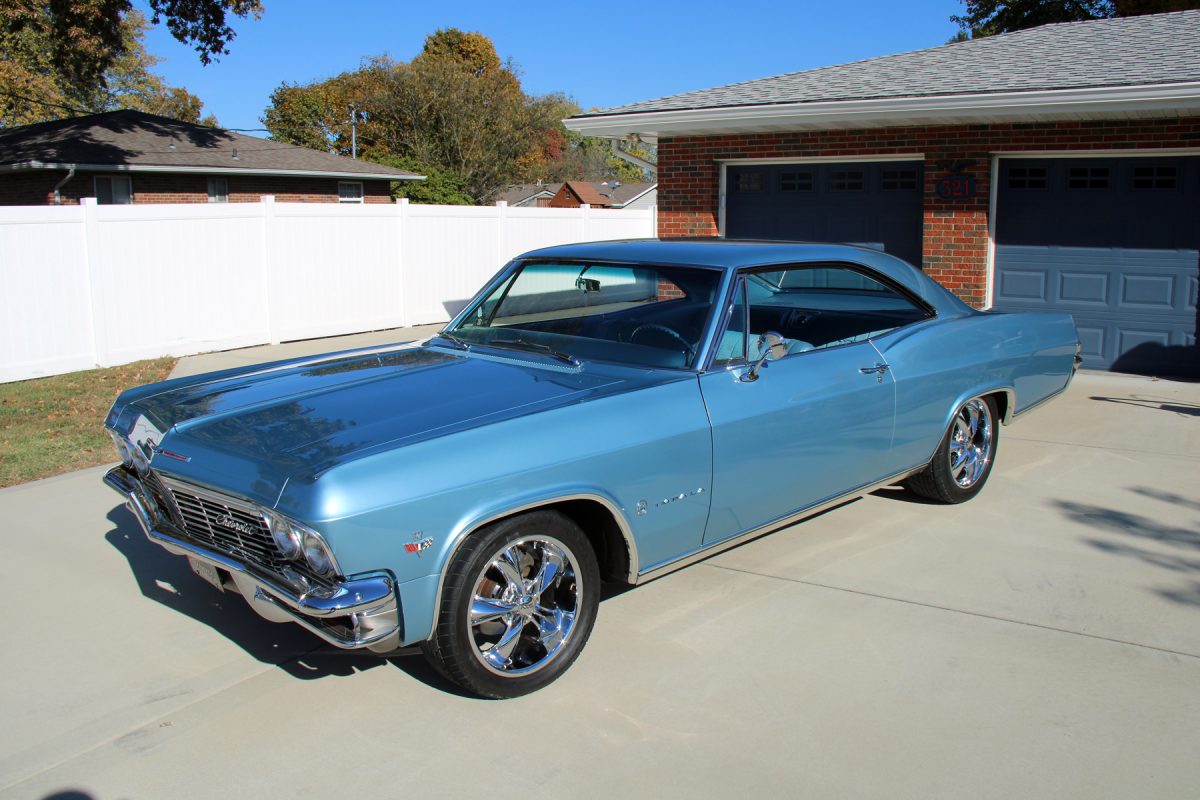
Chevrolet’s Impala sold more than a million copies in 1965, a feat it would repeat in 1966 and it is a record that no other vehicle sold in North America has bettered. (Charles Bolinger photo)
By Charles Bolinger
Editor
Other than the seldom seen Volkswagen Beetle or MG sports car, it was rare to see foreign cars in the heartland 60 years ago.
That year, 1965, Chevrolet set a record that remains unbroken; it sold 1,074,925 Impalas, its top-of-the-line full-size model. That volume was equal to almost half of Chevy’s total production that year. Can you imagine any automaker today selling a million copies of any model and having that comprise just more than 50% of its total annual volume? Unthinkable these days.
Chevy’s full-size model was restyled and redesigned for 1965, kicking off the car’s fourth generation. The Impala became Chevy’s top-of-the-line full-sizer in 1958 and would remain so until 1966 when the Caprice would take over. (Charles Bolinger photo)
Rick Muller knows these two facts as truths since he owns a 1965 Chevrolet Impala Sport Coupe. The Troy resident rolled it out for inspection for a reporter on one of the final nice days of fall.
“It was restored about five years ago and I’ve owned it for two years,” Muller said. “It’s a nice, honest car, fully restored. The guy who owned it stripped it, painted it, completely re-did the interior and put it all back together.
“It’s just a pleasure to drive; it’s unmolested mechanically. Some of my cars have their own mannerisms. I have a ‘57 Bel-Air two-door Hardtop Restomod, fuel-injected motor and all that. It’s a neat car to drive but the manners on this Impala are so good as far as driving normal rather than ‘fighting with it.’
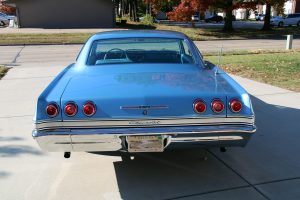
The triple taillight motif graced the rears of most Impalas in one form or another since 1958 (except for the 1959 cat’s eye models). It was a form of seniority as lesser Bel-Air and Biscayne trims had only two taillights per side. Note the dual exhausts on this model. (Charles Bolinger photo)
“When my wife first saw it, she said, ‘That’s the one you keep.’” He followed her instructions as she didn’t want to sell it. In fact, Muller said he posted a ‘57 Bel-Air to sell on Facebook Marketplace with the ‘65 in the background and he got a call from a prospective buyer in California who wanted to buy the Impala instead. Muller stood firm and kept the car.
This example was made in General Motors’ Wilmington, Delaware factory during the third week of September 1964*. It had slightly more than 98,000 miles on the clock as of Nov. 6 but Muller said he does not know the car’s history before the restoration. He said he takes the car out as part of a rotation he does each summer, so it probably comes down to once a month. He doesn’t attend car shows but rather car cruises, he said.
In the off-season, he’ll start his classics every couple of weeks to let them run and to keep the transmission happy.
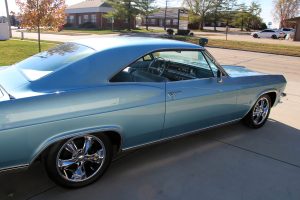
The fastback styling on the two-door Impalas was another sign of the deft styling that flowed from Lead Designer William Mitchell’s tools. During the 1960s, Mitchell put his design stamp on multiple GM products aside from this Impala – Buick’s Riviera and Chevy’s Corvette, to name just three. (Charles Bolinger photo)
“The guy who restored the car bought it from a customer; it came from Wisconsin,” he said.
Under the counterbalanced hood is a 327 CID Turbo-Fire V-8 engine breathing via dual exhausts and backed by Chevrolet’s two-speed Powerglide automatic transmission. It has the following options – power steering and power brakes. But there is no air-conditioning so this example leans more toward the racing side of the spectrum, not a boulevard cruiser.
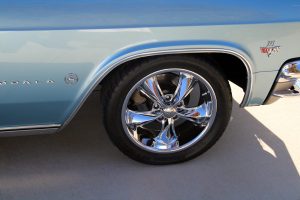
An example of the Foose alloy wheels on Muller’s Chevrolet Impala. (Charles Bolinger photo)
“It had TorqueThrust wheels on it when I got it but I like a little more chrome, so I put the Foose wheels on it.”
Dressed in Mist Blue with a matching blue cloth interior, the car’s paint and interior have been completely redone since it left Delaware 60 years ago.
“I get thumbs up when I take it out,” he said. While waiting for the reporter to arrive, he said a couple of passing drivers honked in appreciation of the Impala in his driveway.
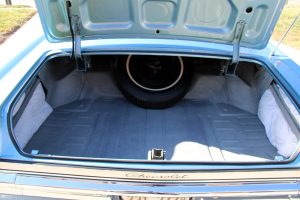
As with most full-size cars in the 1960s, the trunk volume was cavernous. Reaching the spare tire with a trunk full of luggage or groceries could be cumbersome, however. (Charles Bolinger photo)
For 1965, the fourth-generation full-size Chevrolet featured dramatically rounded sides and an all-new front end with new hood contours, curved, frameless side glass (for pillarless models), and sharper angled windshield with newly reshaped vent windows. Sport Coupes wore a sleek semi-fastback roofline, and wheel well moldings were revised.
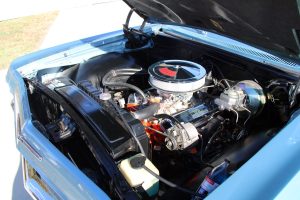
The heart of it all: a 327 CID Turbo-Fire V-8 engine. This unit has power assisted steering and brakes, options becoming more common as the 1960s progressed. (Charles Bolinger photo)
Chevrolet promoted the cars’ Wide-Stance design, adhesively bonded windshield and improved full-coil suspension. A two-tone instrument panel put gauges in a recessed area ahead of the driver. The “X” frame was dropped for a new Girder-Guard full-width perimeter frame which reduced the size of the inside driveline tunnel and redesigned suspension. As with previous years, Impalas featured more chrome trim inside and out, with pleated tufted upholstery and door panels plus simulated walnut trim on the lower instrument panel.
“This by far has been the nicest car I bought sight unseen of all the years I’ve been doing it,” Muller said.
*Every fall, car manufacturers would roll out the following year’s models, usually starting in August or September. That’s why, even though this car was made in 1964, it was known as a 1965.
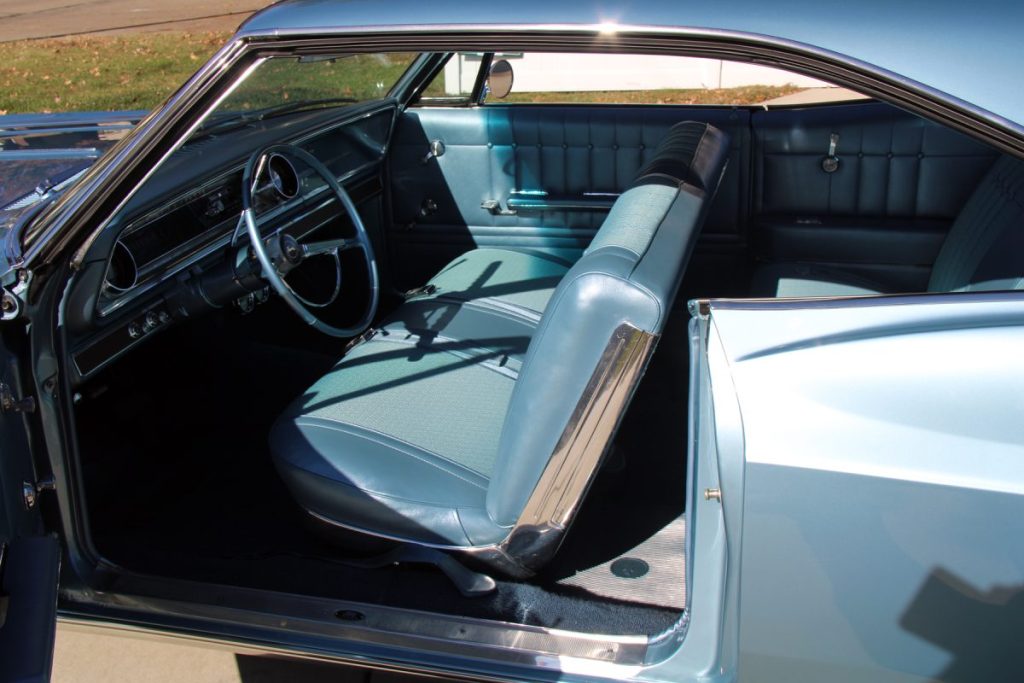
With its split-folding front bench seat and rear bench, the Impala sat six people with ease though it was more comfortable for five and palatial for four adults. (Charles Bolinger photo)