
As America Approaches 250 Years: Donk Brothers’ coal run lasted 25 years
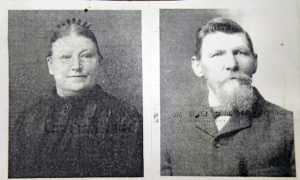
C.W.F. Lange, right, platted the original village of Maryville in 1900 and named it for his wife, Mary, left. The village incorporated in 1902. (All photos in this article provided by the Maryville Historical Museum)
By Mike Picchioldi
Maryville Heritage Museum
A contract for deed was filed on Dec. 6, 1897 that conveyed a strip of C. W. F. Lange property to be used for “a railroad which is about to be constructed, provided said railroad shall be actually constructed and completed 18 months from the date hereof.”
Soon after, the Donk Brothers Coal and Coke Company of St. Louis went to work on the St. Louis, Troy and Eastern Railroad. The St. Louis, Troy and Eastern Railroad tracks no longer exist; the right-of-way is currently used as one of many Madison County Transit’s bike trails.
Lange farmed the site where the Donk Brothers found the perfect spot to sink a new coal mine shaft in 1899. Mr. Lange sold several tracts of land to the Donk Brothers Coal and Coke Company of St. Louis for this purpose. The Donk Brothers company had plans to construct a new coal mine in Maryville. The company also bought the mineral rights of the areas surrounding the deeded tracts. A large portion of their land was located behind the area of the current Mother of Perpetual Help Catholic Church. The Donk Brothers began to sink their Maryville mine shaft in 1900. The mine operation was located on the north side of East Main Street, bordered on the East by the current MCT trail. The current CMC Electric building sits above the area of the old mine shaft.
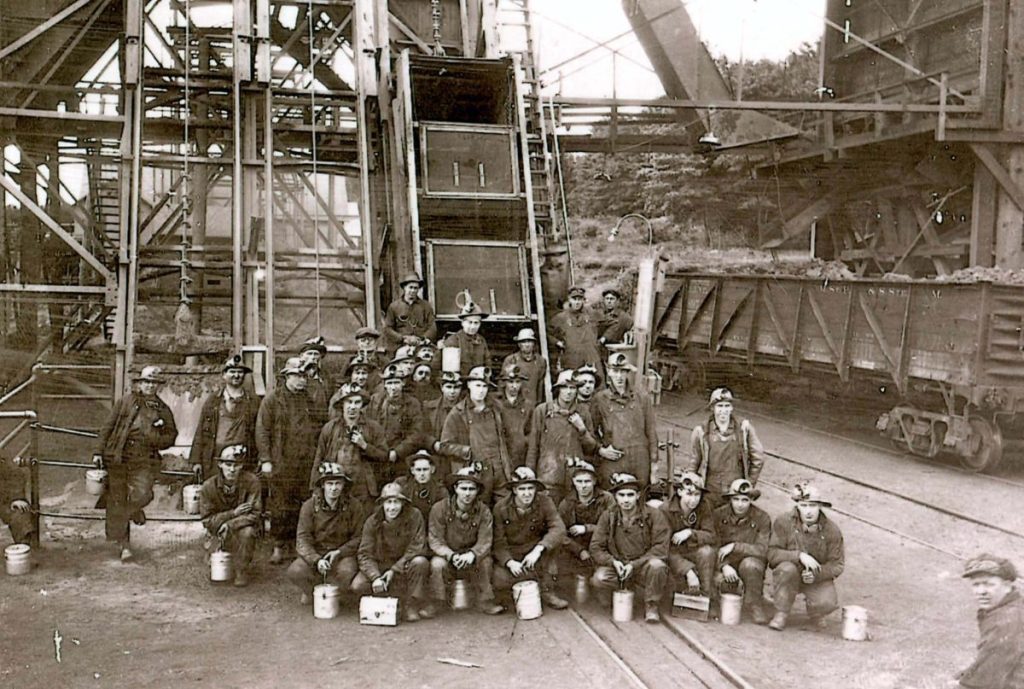
A group of miners at the Donk Brothers Mine in Maryville.
Lange wasted no time. “Seeing a prosperous future for the area,” in October 1900, he dedicated a parcel of land for public use. He platted a town and named it in honor of his wife, Mary. Soon after, miners and their families arrived. Mr. Lange subdivided an area that is now south of East Main Street.
In October 1900, Lange also dedicated a parcel of land for public use. Approximately 300 people resided in the area, with many of the men working for the Donk Brothers coal mine. The dedication of this land was the basis for the eventual transactions that led to the incorporation of the area into the Village of Maryville.
In October of 1901, Lange was instrumental in the extension of the East St. Louis Interurban Railway Company electric streetcar line (what is now present-day Route 159) from Collinsville to Edwardsville. The first streetcar made its way into Maryville on Oct. 28, 1901.
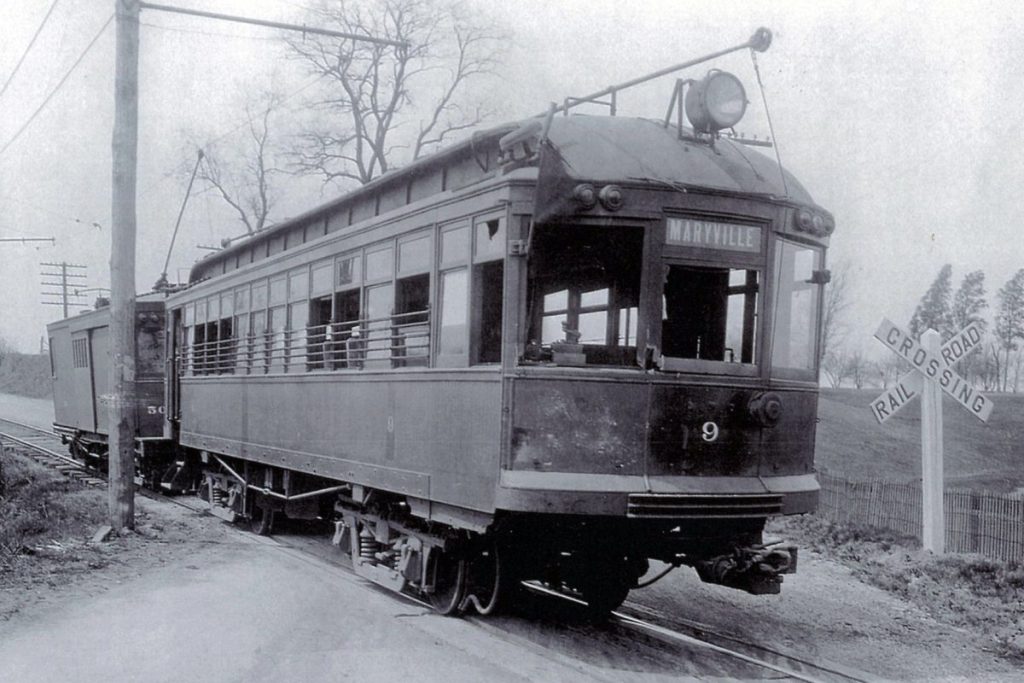
Lange was also instrumental in extending the East St. Louis Interurban Railway Company’s electric streetcar line (along what is now present-day Route 159) from Collinsville to Edwardsville. The first streetcar made its way into Maryville on Oct. 28, 1901.
The current Mattea Hermanson Law building site was once the location of the roundhouse or train shed, where trains were serviced. Passengers boarded the electric streetcars at the intersection of Main and Center streets. Between what is now Center Street and the former Fireside Inn location was a small shack containing a potbellied stove where passengers could wait for streetcars. Deliveries of goods were also made at this intersection.
A petition for a special election was filed in Madison County Court on May 4, 1902, declaring there were more than 300 people in Maryville – men, women and children. On June 3, 1902, a general election was held for the purpose of incorporating the Maryville community. One hundred and twelve ballots were printed, since women and children could not vote, 47 voted in favor of incorporation, three voted in opposition and 62 failed to vote.
The first full year of operation of the Donk Brothers Mine #2 in Maryville was in 1902 and it employed more than 500 miners. The mine shaft measured 9 x 18 feet and traveled 242 feet below the surface. The height of the tipple was 56 feet. The tipple was a structure constructed over the shaft for the purpose of hoisting the coal from the mine.

The Donk Brothers Mine in black-and-white.
The mine became one of the largest in the state, employing 700-800 miners and having a payroll of $90,000 every two weeks. As mine operations grew in Maryville, stores, rooming houses, a blacksmith shop, more than a dozen taverns and other businesses sprang up. There was also a hotel, which was called a boarding house. Most of the occupants were miners. Most of the village’s revenue came from the taverns. McCormick’s ran a restaurant along with the train station, which was located in the far east side of the Hrubetz building (which became Fireside Inn). This was a favorite place for travelers to stop and dine. Cohens owned a general store on Main Street.
The Donk Brothers worked side-by-side with the Village of Maryville for much of the 20-plus years the mine was in operation. They needed each other to survive. As the production of the mine increased, the need for miners also increased. As the number of miners multiplied, the village grew and expanded. The needs of the miners’ families necessitated the opening of schools, parks and churches. Police and fire protection soon followed. The Donk Brothers were very considerate and charitable when it came to improving the village. They helped build the first school in the village on the East side of the railroad tracks. They helped pay for a crossing guard to see that the school children crossed the tracks safely. When that school burned down in 1915, they donated land for the construction of a new school building on Donk Street. They were instrumental in the birth of the fire department. They platted an area north of East Main Street for more homes for the miners. The Donks were very discerning with their generosity to the village. They knew that whatever they invested in the well-being of the village would turn more profits for their mine business.

A colorized shot of the Donk Brothers Mine circa March 1910.
The romance among the village, the miners and the coal company wouldn’t last forever. The owners of Donk Brothers Mine #2 lived in St. Louis. Operational costs were increasing, mainly due that the actual mining was increasingly distancing itself from the mine shaft. Another deciding factor was that the Donk Brothers lost in court for mining outside of their mineral rights. All this led to the Maryville mine closing in February of 1925.
During its operation, the Donk Brothers’ #2 Mine in Maryville, produced approximately 10.4 million tons of coal between 1900 and 1925.
Former Maryville Village President (Mayor) Rudy Hrubetz (1929-31) had written in a letter that the Maryville Donk Brothers Mine provided all the coal that was used at the 1904 World’s Fair. The Donk Company had made a contract with the fair that they would be able to provide the coal for all the fair’s needs. The Donk Brothers’ mines in Maryville were a very short distance from the fair, making them a convenient and logical source for supplying the fair’s high demand for power. Mr. Hrubetz also mentioned that the train cars used to transport the coal to the 1904 World’s Fair were a new type of coal car, made from steel and not the more common wooden cars. He went on to state that these new cars were labeled on the side with LPE in bold letters, which stood for Louisiana Purchase Exposition.
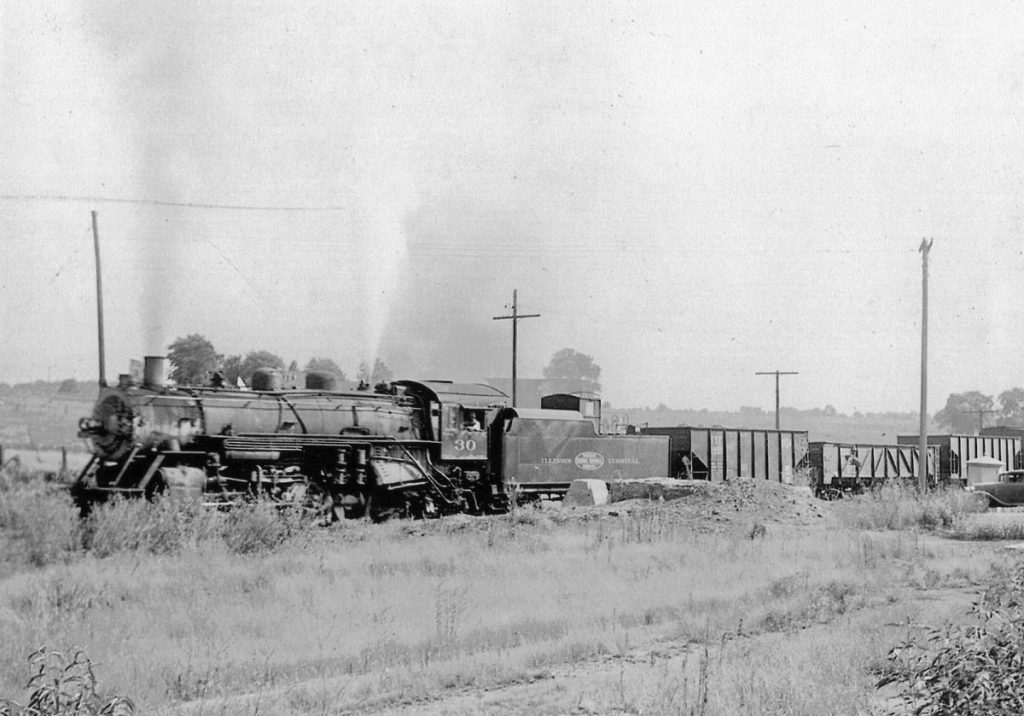
One of the Illinois Terminal Railroad trains, featuring Engine #30. Note the steel-bodied coal tender behind the engine, which replaced earlier wood-bodied ones.
[Information provided by Maryville Heritage Museum Chairperson, Mike Picchioldi, with some information also provided by Maryville Centennial History book.]

