
Highland seeks public input as officials consider new e-bike regulations
By Brittany Blackwell
Reporter • Highland officials seek resident feedback as the city considers new regulations for electric bicycles and similar mobility devices to enhance public safety.
Carole Widman, public safety director and chief of police, updated the Highland City Council at its July 6 meeting after discussions about increasing concerns related to e-bikes in the community.
City Manager Chris Conrad introduced the matter during the staff reports section of the meeting, stating that previous discussions with Widman included Councilman Bill Napper and Councilwoman Sarah Sloan.
This comes as Governor JB Pritzker signed a new bill that took effect on July 1 to replace prior regulations on these devices.
In Highland, officials are focusing on two additions that go beyond Illinois law.
One proposal would prohibit passengers on e-bikes and electric scooters when the operator is under 16.
“We don’t want 12-year-olds riding around with their 5-year-old little brother,” she said.
Highland is also considering prohibiting motorized e-bikes and scooters in city parks to improve safety and protect park grounds, some of which have already sustained damage. Implementing park restrictions would require new signage.
While Illinois law covers many aspects of these devices, Widman stated that the city can regulate their use within municipal parks and on certain city-owned properties. These low-speed e-bikes are permitted on the Madison County Transit trail system, although it was noted that enforcement on these paths may be challenging.
E-bikes have also raised concerns on local roadways according to local officials. Consistent with Illinois law, these devices are prohibited from operating on sidewalks.
“These e-bikes are on the roads and sidewalks throughout town,” Widman said. “A rider of an e-bike may not be watching for traffic signs when approaching a vehicle, and someone will get hurt.”
Operators must follow all bicycle traffic laws, obey traffic control devices, and travel in the same direction as traffic. Traditional, non-motorized bicycles remain permitted where allowed.
Highland is also considering local enforcement measures and fines for violations.
Widman stressed that officials understand that these devices are used for more than recreation. Rather, the goal is to reduce public safety concerns regarding interactions between motorized devices and pedestrians and to preserve city parks.
“We need to remember these are mobility devices,” Widman said. “Some people use them for transportation, work, or school, not just kids riding around town.
“We want these devices to be used appropriately. We don’t want to limit mobility; we just want safety.”
Mayor Kevin Hemann said the proposal was well thought out. He and the council members supported the recommendation to gather public feedback for review before moving forward with establishing regulations and enforcement. No formal timeline was mentioned.
Councilwoman Peggy Bellm added that she’s already received some feedback.
Community members are encouraged to provide input by completing a survey available on the city’s website at highlandil.gov. Search for “Community Input on E-Bikes and Electric Scooters.”
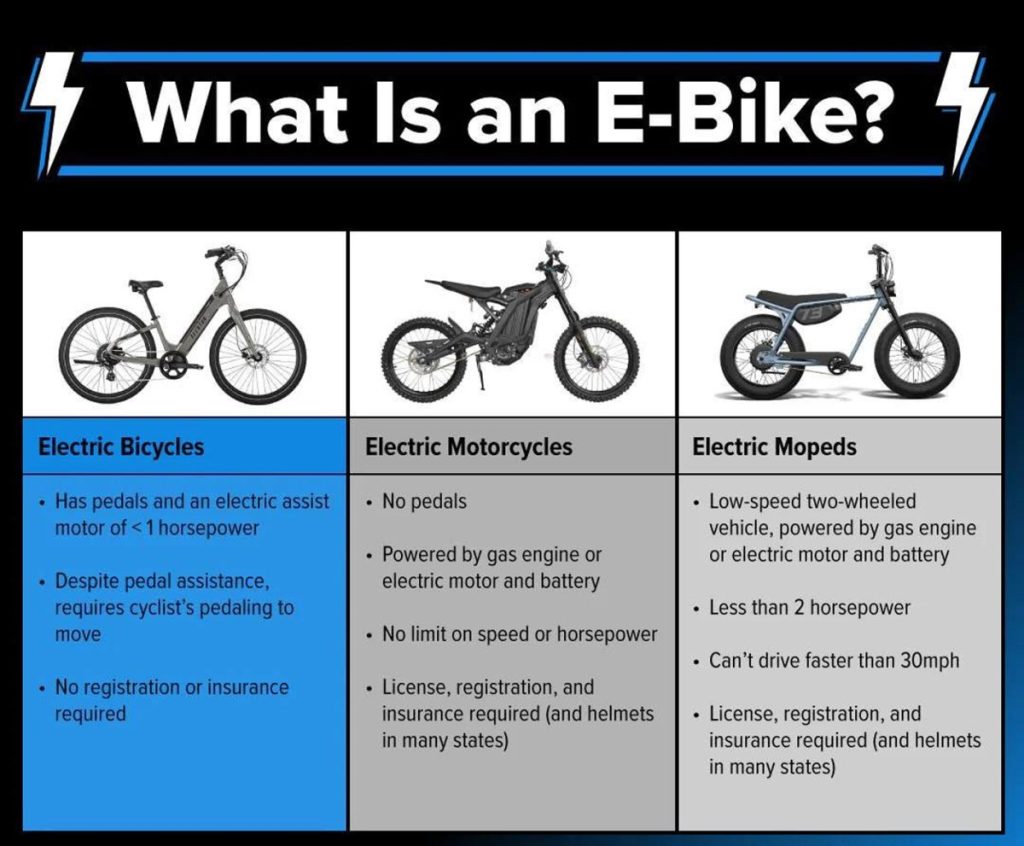
Recent changes to Illinois state law introduce several important updates for e-bike users. Key changes include raising the minimum age for operating Class 1 and 2 e-bikes to 15 years old. For Class 3 e-bikes, operators must now be at least 18 years old to carry passengers who are not related to them, their own children, or stepchildren. Without passengers, the minimum age for a Class 3 operator is 16. Class 3 devices are pedal-assist only and reach up to 28 mph.
Similar to Class 3, Class 1 bikes are pedal-assist only. The difference is these bikes ride up to 20 mph. Class 2 devices are throttle-assisted, with a motor to propel the bike without pedaling. These bikes run up to 20 mph. The three low-speed e-bikes classes are categorized by the state.


