
As America Approaches 250: Yanda Log Cabin remains part of Glen Carbon History
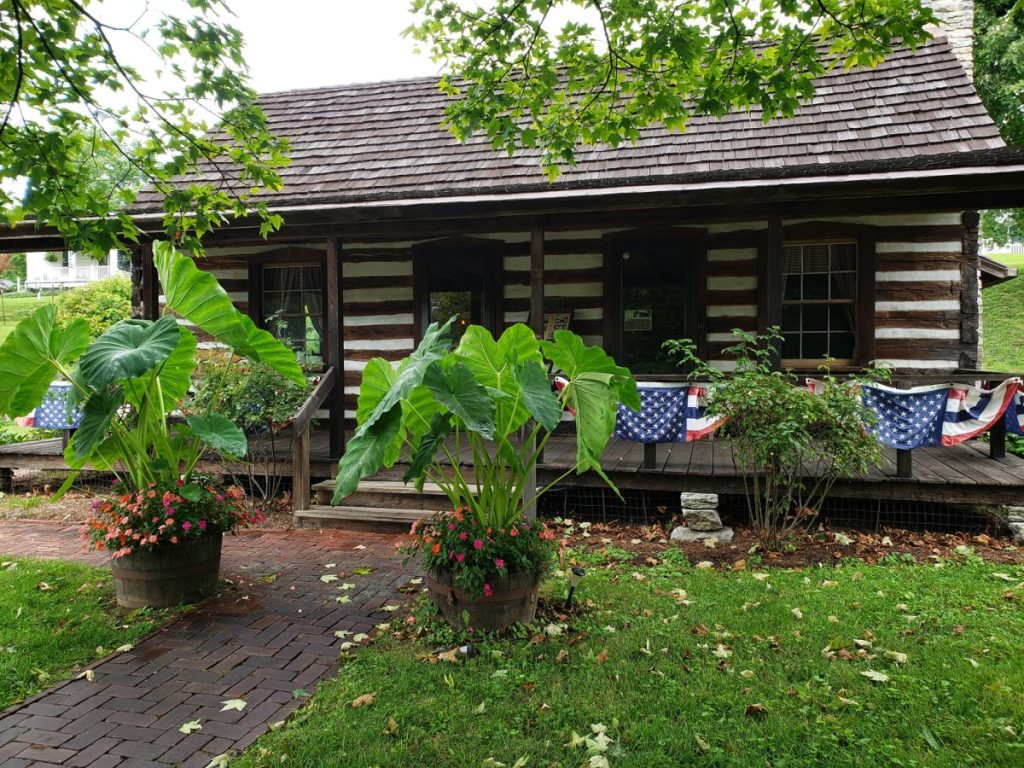
The Yanda Log Cabin as it appears today. (Photo courtesy of the Village of Glen Carbon)
By Kathy Turner • With Log Cabin Days last weekend, Glen Carbon continues to honor the Yanda Log Cabin which was a part of Glen Carbon’s history in the late 1800s. Visitors attended the open house at the cabin this past weekend and learned about the cabin’s historical role in Glen Carbon. They also learned about life during the late 1800s in the village.
William and Anna Zrala Yanda came to the United States from Bohemia, part of the Austrian Empire, in the early 1850s. They brought with them their oldest children. They made a home near Goshen road and had a neighbor who was a wheelwright. William, a blacksmith, paired up with his new neighbor to offer repair services to local residents and travelers.
William and Anna had more children as the years passed and they, too, made their homes in the Glen Carbon area. It is estimated that in 1853, William built the Yanda Log Cabin, a one-story structure about 520-square-feet in size. When William passed away in 1885, his son Frank Sr. moved into the cabin along with his family.
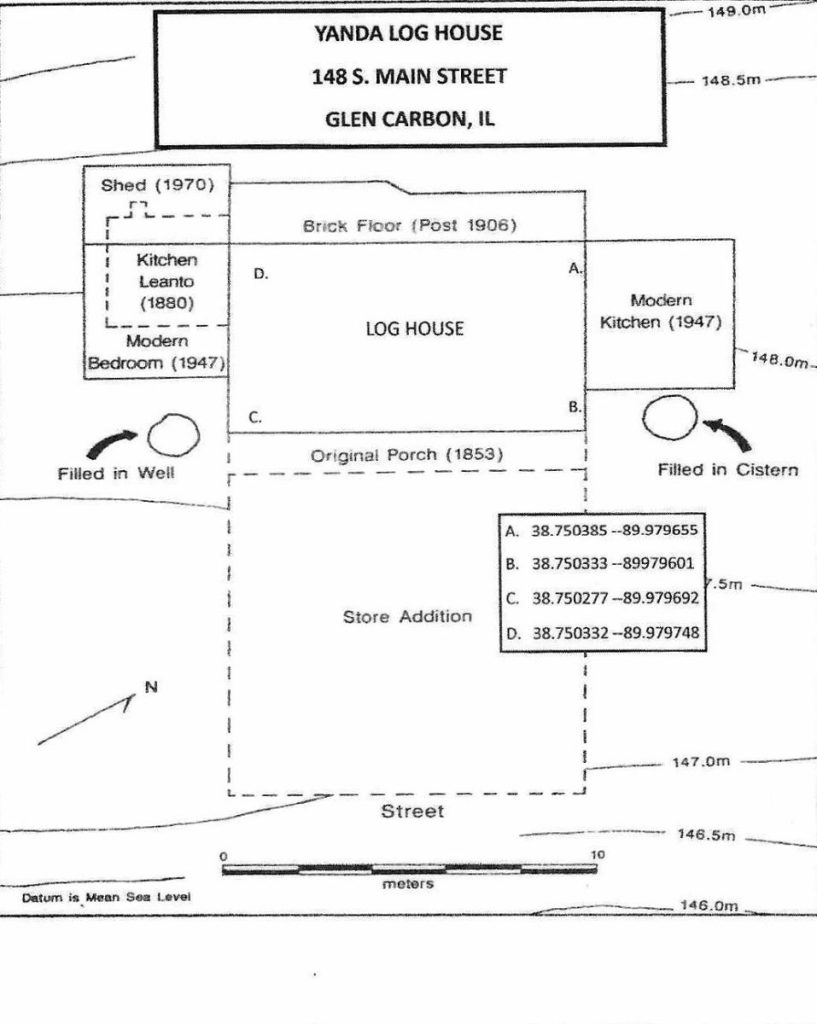
Through the years, more additions were installed. Aside from the original two-bedroom home and porch, there was a kitchen lean-to added in 1880; a saloon in 1883; a modern bedroom and kitchen in 1947; and a shed in 1970. (Photo courtesy of the Village of Glen Carbon)
The cabin had two rooms, a kitchen and a bedroom that William and Anna shared with their youngest children. The older children made their ‘beds’ in the attic spaces of the cabin. There were two front doors to allow entry through both main rooms. There was also a side door in the kitchen.
In 1893, Frank Yanda, Jr. built a saloon across the road that is now the Old Towne Tavern. Over the years, the log cabin saw changes. These included an addition that was a restaurant and soda parlor operated by Frank’s sister, Elizabeth. It was managed by others until the mid-1940s, when Frank sold the property.
Changes in the past decade included the addition of another bedroom, a modern kitchen and a bathroom. A dormer was cut into the rafters making another bedroom space. These changes soon disguised the cabin’s original shape, especially with the addition of siding that covered all signs of the original logs.
In 1989, the Glen Carbon Fire Protection District scheduled the building for burning as part of their training program. The Glen Carbon Historical and Museum Commission learned of this and asked village leaders if they could investigate what was under the siding. They brought in the services of an archeologist to assist and determine if the structure might be restored for its history. The village then agreed to buy the house and lot and provided funding for restoration with the help of volunteers.
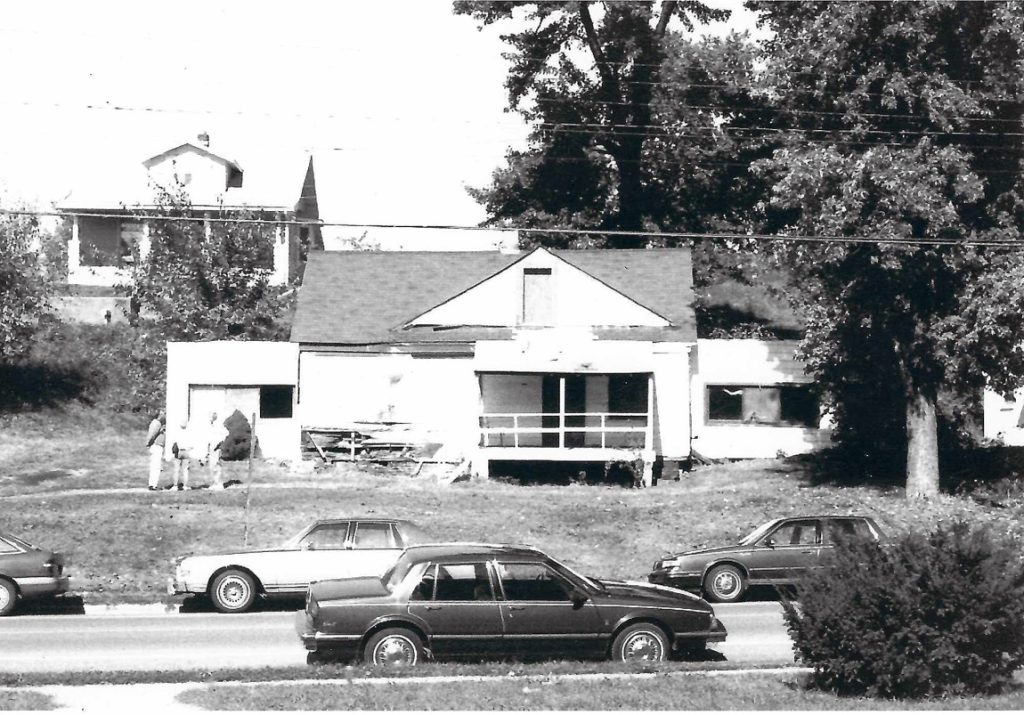
In 1989, the cabin was scheduled to burn as a training exercise for the Glen Carbon Fire Protection District. The village’s historical and museum commission intervened and asked village trustees to let them have an opportunity to investigate what was beneath the modern home’s façade, which was granted. The village later bought the cabin. (Photo courtesy of the Village of Glen Carbon)
Robert Williams led the volunteers. They stripped off the siding, the obvious additions and dormers and discovered the original cabin. Some replacement logs were needed to make repairs, so they used white oak and square nails to match the original cabin construction. Three original windows were still in place and the volunteers sourced matching windows from a local home of the same age to enclose the cabin.
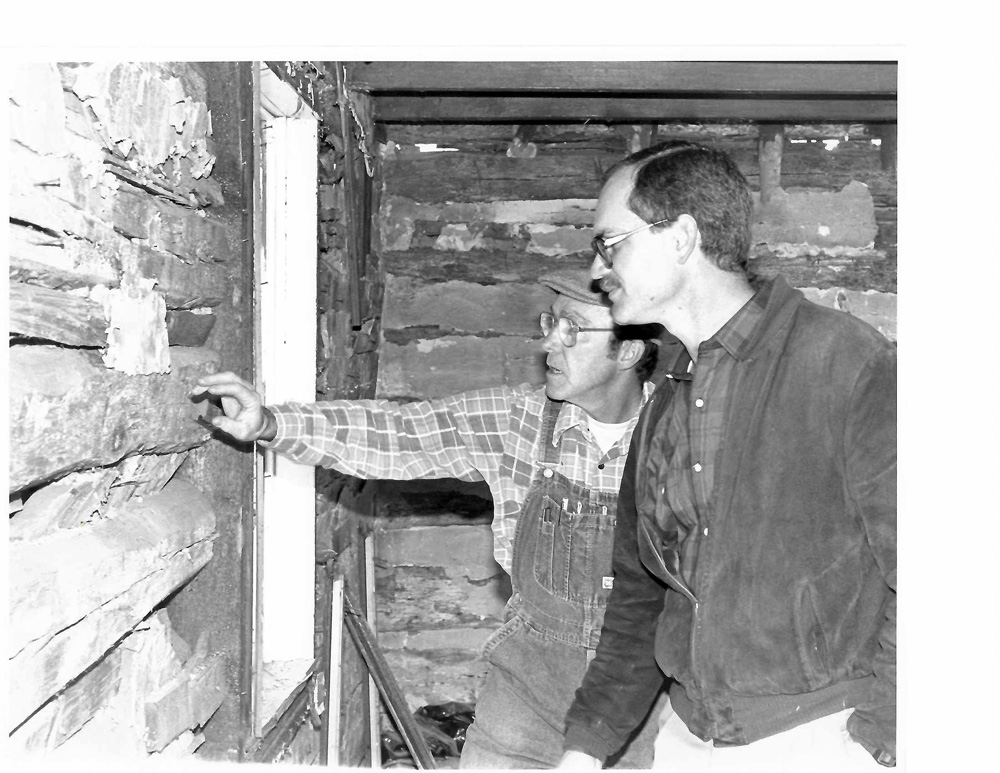
In 1990, Robert “Bob” Williams inspects logs with Dave Cooper during the cabin’s restoration. (Photo courtesy of the Village of Glen Carbon)
Archeologists were able to determine that grease stains on the floor indicated where the kitchen was. They also found broken steins and five cent pieces on one side of the cabin, which indicated this was where the saloon stood. Outside, they uncovered a drinking well and a cistern.
Today, the cabin welcomes visitors on a regular basis. It is convenient for local grade school children to enjoy and discover the history of Glen Carbon. And it offers an opportunity for everyone to step back in time as we prepare to celebrate the 250th Anniversary of our country.


