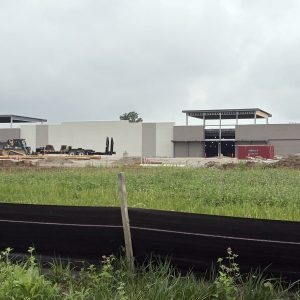
Madison County Board to decide on Glen Carbon solar project
By Randy Pierce • Without a decision, either in support or opposed concerning a special-use permit request that, if approved, would authorize the development of a solar energy project near Glen Carbon, by the building and zoning committee of the Madison County Board, the matter is set to go before the full board at its regular monthly meeting scheduled for next Wednesday, May 20, beginning at 5 p.m.
After the county’s zoning board of appeals voted in late April to recommend denial of the permit request, that action was advanced to the building and zoning committee which met Tuesday, May 5, then resisted making any motion one way or the other before forwarding it to the final step in the process.
If approved, the permit would allow for the development of a five-megawatt commercial solar energy facility at 2951 Old Troy Road in unincorporated Glen Carbon, per a request from Trentino Solar LLC of Lafayette, Louisiana on behalf of the Lorraine M. Keller Trust.
The procedure followed by the county board committee requires that any actions regarding zoning board recommendations be presented for a vote as a positive-worded motion at its May 5 meeting, the second of three levels of consideration.
This means none of the committee members were entitled to formally suggest, in regard to its decision, that the permit request or the ZBA recommendation be denied. The motion the committee would vote on either had to offer support to the ZBA decision or support of the project. Neither happened, leaving it to be decided Wednesday as it would anyway even if the committee had voted.
Discussion by speakers under the public comment segment of the committee meeting included some repetition from what had been offered at the ZBA hearing and some statements which had not been previously made.
Representatives of the development team came to the committee meeting prepared to justify the approval of the request and included comments that every aspect of the project meets the standards for solar development as set down in county ordinances including the dimensions, design, setbacks, fencing and panel height.
That fencing, as included in the plans, is orchestrated to be pollinator and wildlife friendly plus, those solar team members contend, there are no historic properties that will be disturbed and a complete decommissioning plan has been included for when the development will cease to operate.
Also at issue before the committee, as brought up during the ZBA hearing too, an Interstate 55 corridor plan is not applicable to this site and a special use covered by the county’s zoning ordinance would be exempt from it, according to information presented by the developers to the committee.
A final point they brought forward in those opening remarks concerns how “many developers had opportunities to develop this project (site) for commercial or residential development and yet it has not happened.”
Ashleigh Rockwell, who is half of one of the three couples and an individual living nearby the proposed project site who submitted letters of opposition to the ZBA, spoke to the building and zoning committee and questioned the accuracy of the previous statement about the lack of historically significant evidence by saying anytime she and her husband walk around the site, they find arrowheads and other artifacts.
She further expressed concern about the water runoff in the area related to tributaries that feed into Judys Creek and noted the Canteen Creek drainage plan, covering a larger region, states there is a “critical wetland area” on the 95 acres of the parcel where the solar project is proposed for 30 of those acres.
“I just feel like there is [sic] too many unknowns with this project,” Rockwell concluded, “specifically with some of the compliance things.”
“What will become of the rest of that 95 acres that they intend on buying?” she continued. “Who will the future owner be? They make incomplete and inconsistent statements.”
Another individual appearing before the committee who also addressed the ZBA, Glen Carbon Mayor Bob Marcus, asked for a no vote on the permit request and said he felt it would have “a negative impact on the village and the county’s economic growth, housing development and transportation needs” while also causing injury to nearby property values, citing a study he referenced which said that impact would be a negative 4.8%.
Marcus additionally stated there was no access to the west side of the property in question, something that needs to be addressed but is not in the plans. He also conjectured about a conflict or lack of adherence with the I-55 corridor plan and non-compliance with the Village of Glen Carbon’s comprehensive plan adopted in late 2025.
The village, Marcus went on, has invested $6.9 million into improving Old Troy Road and another $2.6 million into a water main next to it in anticipation of the property’s use other than a solar farm “because we know there’s going to be growth on the east side and we have other developments in the works, especially for our water and sewer to support the growth.”
James Craney, an attorney who resides at 2959 Old Troy Road and who also spoke to the ZBA, brought up something different this time, asking who was going to benefit from the solar project, alluding to a seller and company that are both out-of-state while stating there is no guarantee people living nearby will realize reduced electricity bills.
Commenting that he questions the building of a solar farm “right smack dab in the middle of Glen Carbon,” and adding he has solar panels on his home, Craney said the best use of the property being discussed is agricultural or residential.
“It just doesn’t make any sense. There’s got to be other places to build this,” Craney added.
After Craney further said there is an ordinance which prohibits vehicles being taken over the Madison County Transit trail nearby, thus restricting access to the property, Seth Uphoff, an attorney connected with the Trentino team, shared photos with the committee that, he said, show how natural screening makes what is proposed “about as hidden of a project as you can have in this area.”
“You’ve got a project that meets all the requirements of your ordinance,” Uphoff continued, “and, really, that’s the law that you’re supposed to be following here, the state law and the ordinance, and if you look at the facts there presented in the application and presented at the ZBA hearing, we meet all those requirements.”
He further said the project sets far back from the road and nearby residences while commenting that a qualified expert told the ZBA “there will be less runoff and less drainage off this property once the solar project is in place than raised with row crops.”
While reiterating that the I-55 corridor plan is not applicable in this situation, Uphoff said the benefits from the project to be realized included direct tax income, an opportunity for utility customers to sign up for savings on their bills, jobs created, both temporary and long-term, plus “you will have better schools” because of the additional tax revenue the applicable district(s) will receive.
Addressing the ownership comments made earlier, Uphoff said, “Every time you build an industrial park or a commercial park or mall, the developers don’t own and operate it. They sell it to people who run it.”
Also reminding the committee members about standing up for “landowner rights,” Uphoff said those holding title to the property have been “trying to sell it for years and nobody was interested because they couldn’t develop it. This is a development that can happen, that can benefit the community and it benefits the landowners.”